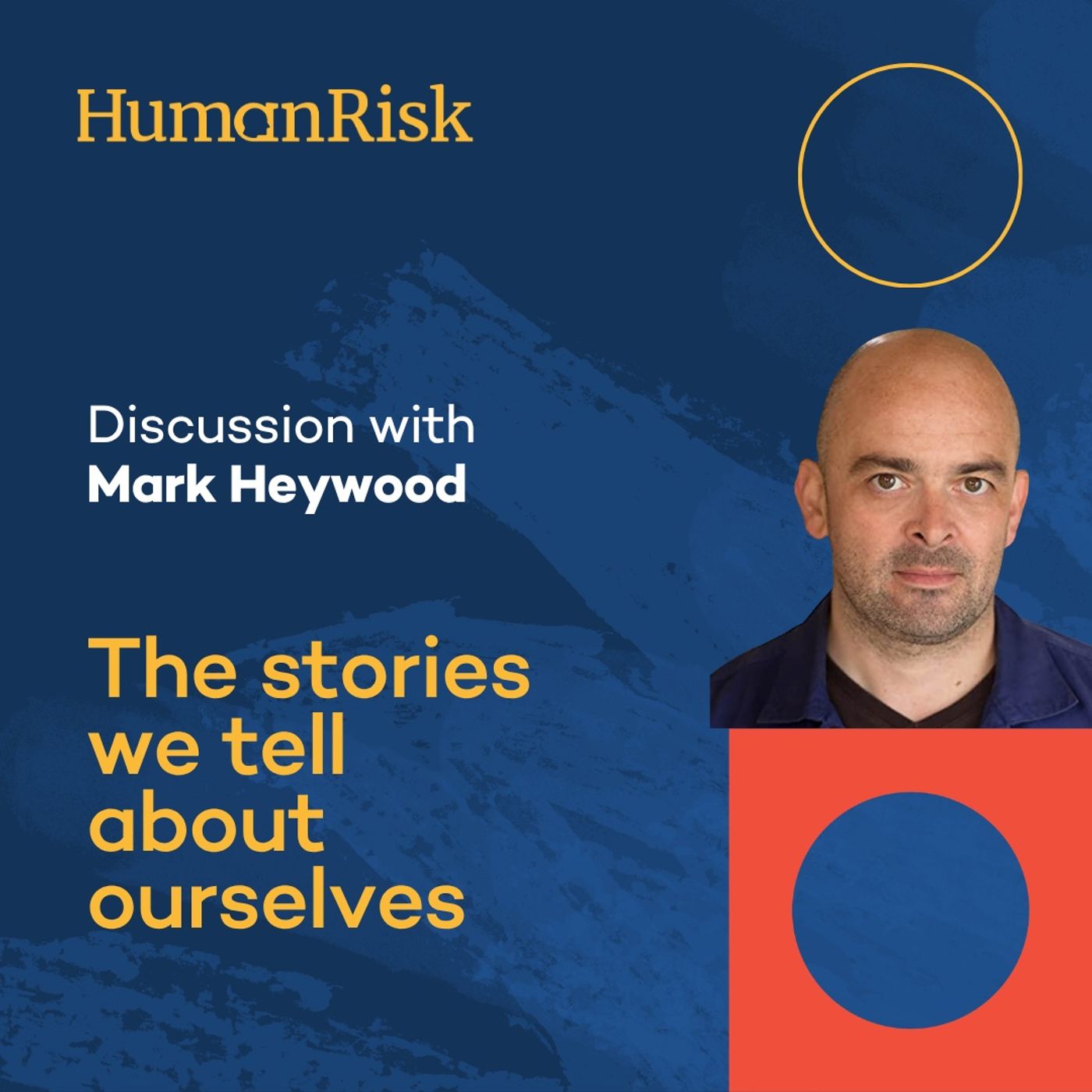
Mark Heywood on The Stories We Tell About Ourselves

 Spotify
 Apple Podcasts
 Overcast
 Castro
 iHeartRadio
 PocketCasts
 Castbox
 Podchaser
 RSS Feed
 Spreaker
 What parts of yourself have you learned to hide in order to be taken seriously? My guest on this episode is Mark Heywood, a friend of the show, returning guest and someone I've collaborated with on a number of projects.
Episode Summary & Guest Profile
Mark has spent more than twenty years working in crisis management and operational resilience, while simultaneously building a successful career as a bestselling novelist, screenwriter and, more recently, stand-up comedian.
On the morning we recorded this conversation, Mark published an article marking his fifty-first birthday. In it, he reflected on the pressure many of us feel to present only one version of ourselves professionally, arguing that his creative and corporate lives were never really separate.
As he puts it, they were 'not two jobs, but one obsession wearing two different lanyards.' That simple idea becomes the starting point for a much wider discussion about the stories we tell ourselves, and the stories organisations tell themselves.
Along the way we explore:
- Why "stay in your lane" may say more about other people's expectations than your own potential.
- Why organisations often encourage people to bring their whole selves to work, while rewarding conformity.
- What interviews, dress codes and organisational culture reveal about human behaviour.
- Why stories often influence behaviour more effectively than rules, policies and frameworks.
- What films can teach us about operational resilience, cybersecurity and crisis management.
- Why the Titanic remains one of the most powerful lessons in organisational failure.
- How imagination is a strategic capability rather than a soft skill.
- Why thinking through "severe but plausible" scenarios requires organisations to become better storytellers.
- Mark's birthday article: "A Birthday Declaration from Someone Who Spent Over Twenty Years Pretending to Be Half of Himself" (LinkedIn)
- Mark's Behind The Spine podcast
- The Writing Salon
- Behind The Spine podcast
- Mark on LinkedIn
- Mark's previous appearances on the show talking about The Creative Industries under COVID, and Human Risk in the Creative Industries
- Films, Stories & People Mentioned
AI-Generated Timestamped Summary
00:00 – Why do we hide parts of ourselves to be taken seriously?
03:40 – Mark explains why he stopped separating his creative and corporate identities.
08:00 – Which hobbies and outside interests are considered professionally acceptable—and why?
10:30 – Job interviews, authenticity and bringing your whole self to work.
16:00 – Jeremy King on why behaviour matters more than dress codes.
19:00 – Rachel Heyhoe Flint, the MCC and what institutional rules reveal about culture.
23:00 – Why stories influence behaviour more effectively than rules.
24:00 – The Trojan Horse and using films to teach cybersecurity and resilience.
29:00 – The Titanic as a lesson in organisational resilience rather than maritime history.
32:00 – Conduct versus outcomes: why testing matters more than compliance.
36:00 – Using stories and popular culture to make risk real.
38:00 – Noah's Ark, history and the enduring power of storytelling.
40:30 – CrowdStrike, PPE and why organisations keep repeating the same mistakes.
46:00 – Stories aren't predictions—they're a way of exploring possibility.
49:00 – A ransomware exercise and the danger of relying on fixed policies.
52:00 – Returning to the Titanic: preparing for the inquiry before the crisis.
55:00 – Thinking like an attacker and challenging assumptions about cyber risk.
58:00 – Taylor Swift, insurance and why seemingly ordinary data can become highly sensitive.
1:02:00 – The idea of "risk inflation" and why yesterday's rules aren't enough.
1:10:00 – Why memorable stories change behaviour more effectively than realistic scenarios.
1:15:00 – Reverse stress testing and imagining what could really break an organisation.
1:20:00 – RAG ratings, reporting and the danger of looking resilient instead of being resilient.
1:23:00 – Final reflections on creativity, identity and why being more than one thing is a strength.