Sept. 7, 2026
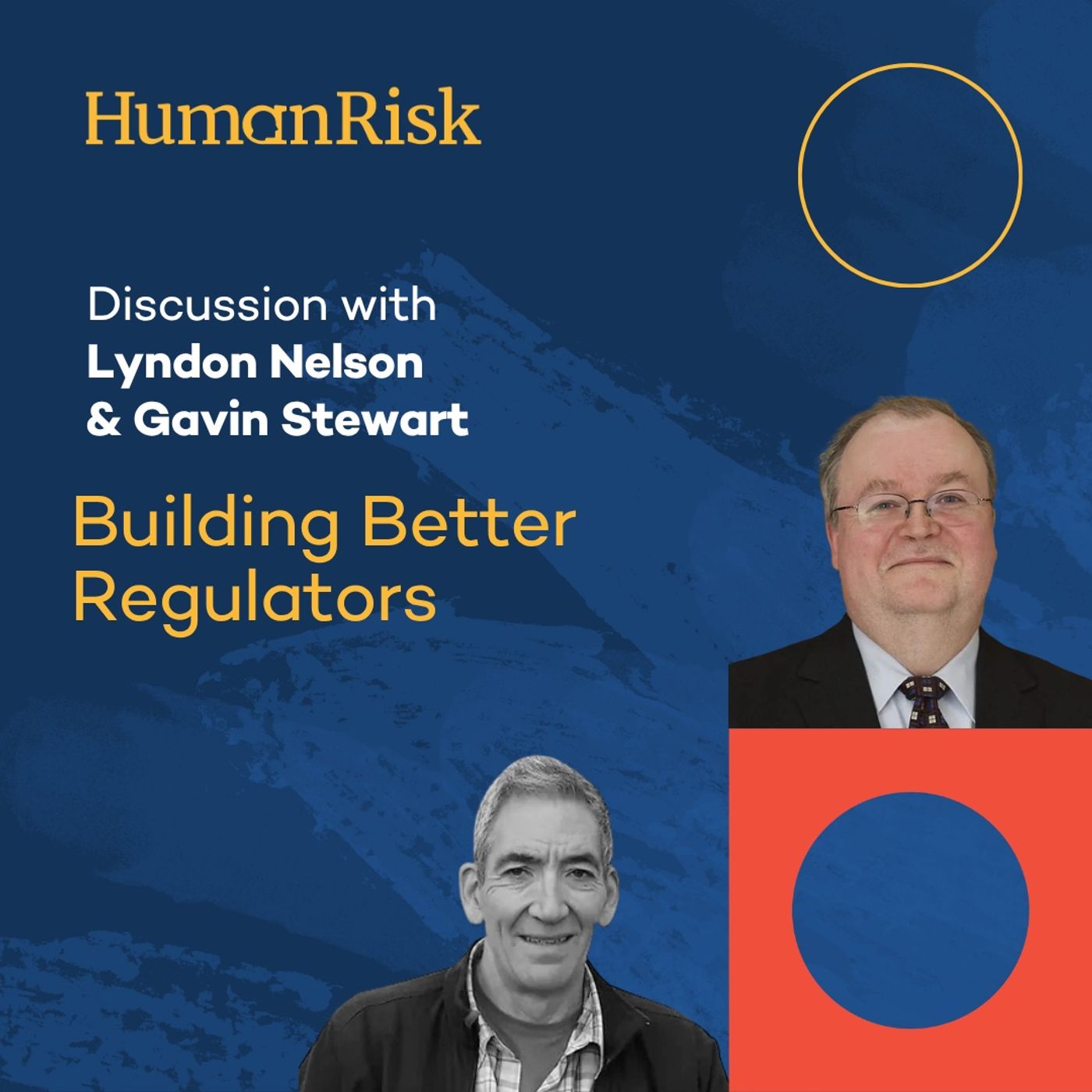
Lyndon Nelson & Gavin Stewart on Building Better Regulators

 Spotify
 Apple Podcasts
 Overcast
 Castro
 iHeartRadio
 PocketCasts
 Castbox
 Podchaser
 RSS Feed
 Spreaker
 What if understanding regulation could help us spot when politicians are promising the impossible? Regulation sounds simple in theory. Something poses a risk, so we create rules and a regulator to control it. In practice, things get complicated very quickly. It's something we all benefit from, but equally can experience as redtape that prevents us from doing what we think we ought to be able to.
On this episode, I'm exploring the inner workings of regulation; so whether you are a regulator, a compliance officer, work in a regulated industry or just a member of the public, this'll help you understand what is and isn't possible and why regulation can often seem ineffective or overbearing.
Episode summary
My guests on this episode are Lyndon Nelson and Gavin Stewart, two highly experienced former financial regulators and authors of Building Better Regulators: The Art of the Impossible.
Regulators are expected to protect consumers, maintain stability, encourage competition, support innovation and increasingly promote economic growth. The problem is that those objectives don't always point in the same direction. As Lyndon and Gavin explain, making trade-offs is part of regulation; pretending those trade-offs don't exist is where things become problematic.
In our conversation, we explore the tension between rules and principles, why firms don't always respond to regulation in the way regulators expect, and how enforcement involves choices about which cases not to pursue. We also look at regulatory perimeters, the hidden costs of collecting data, and why having more information doesn't necessarily lead to better regulation.
We also discuss AI and crypto, behavioural science, consumer protection, international regulation, the temptation to fight the last war, and why regulators need imagination as well as analysis. Ultimately, this is a conversation about regulation as a human system — shaped by incentives, politics, judgement, uncertainty and the behaviour of both regulators and the regulated.
Guest bios
Lyndon Nelson spent 33 years at the Bank of England, much of it working in regulation, and ultimately became Deputy CEO of the Prudential Regulation Authority (PRA). Since leaving the Bank, he has worked with organisations including London Business School and the International Monetary Fund.
Gavin Stewart began his career as a banking supervisor at the Bank of England before moving to the Financial Services Authority (FSA), where he held a variety of senior roles. He later became Chief Risk Officer at the Financial Conduct Authority (FCA) and subsequently worked in the private sector.Together, they are the authors of Building Better Regulators: The Art of the Impossible, a book designed to help regulators — and those who interact with them — better understand the practical realities of regulation.
Links
AI-Generated Timestamped Summary
00:00 Why regulation matters — and the trade-offs politicians often prefer not to acknowledge
03:00 Meet Lyndon Nelson and Gavin Stewart
05:00 Why they wrote the book — and why regulation is so badly understood
07:00 The impossible mandates politicians give regulators
10:00 Primary objectives, secondary objectives and the problem of “have regards”
14:00 Why understanding regulatory failure doesn’t mean letting regulators off the hook
18:00 Regulation as a fundamentally human and behavioural endeavour
21:00 How firms respond to, interpret and game regulation
22:00 Rules vs principles — the impossible search for certainty and flexibility
28:00 Enforcement: what happens when regulators have more cases than resources
31:00 Choosing whom to enforce against — severity, coverage and the “splash test”
34:00 Who are rules really written for — the compliant, the gamers or the criminals?
38:00 The regulatory perimeter — and why technology makes boundaries increasingly difficult
44:00 BCCI, Barings, Wirecard and FTX: the challenge of regulating across borders
48:00 Why more regulatory data doesn’t necessarily produce better regulation
59:00 The “Maginot Line” problem: regulating to prevent the last crisis rather than the next one
01:01:00 Failure of imagination, stress testing and learning to think the unthinkable
01:04:00 Accountability regimes, senior managers and regulation as an ongoing experiment
01:09:00 The industry that interprets regulation — and the strange business of regulatory “Kremlinology”
01:13:00 Who should work for regulators — career regulators, industry secondees and the value of both
01:17:00 Should regulators be better at following the standards they impose on others?
01:19:00 What “risk-based regulation” actually means — and why regulators struggle to admit they have a risk appetite
01:22:00 Why better public debate about regulation matters — and final thoughts on the book.
On this episode, I'm exploring the inner workings of regulation; so whether you are a regulator, a compliance officer, work in a regulated industry or just a member of the public, this'll help you understand what is and isn't possible and why regulation can often seem ineffective or overbearing.
Episode summary
My guests on this episode are Lyndon Nelson and Gavin Stewart, two highly experienced former financial regulators and authors of Building Better Regulators: The Art of the Impossible.
Regulators are expected to protect consumers, maintain stability, encourage competition, support innovation and increasingly promote economic growth. The problem is that those objectives don't always point in the same direction. As Lyndon and Gavin explain, making trade-offs is part of regulation; pretending those trade-offs don't exist is where things become problematic.
In our conversation, we explore the tension between rules and principles, why firms don't always respond to regulation in the way regulators expect, and how enforcement involves choices about which cases not to pursue. We also look at regulatory perimeters, the hidden costs of collecting data, and why having more information doesn't necessarily lead to better regulation.
We also discuss AI and crypto, behavioural science, consumer protection, international regulation, the temptation to fight the last war, and why regulators need imagination as well as analysis. Ultimately, this is a conversation about regulation as a human system — shaped by incentives, politics, judgement, uncertainty and the behaviour of both regulators and the regulated.
Guest bios
Lyndon Nelson spent 33 years at the Bank of England, much of it working in regulation, and ultimately became Deputy CEO of the Prudential Regulation Authority (PRA). Since leaving the Bank, he has worked with organisations including London Business School and the International Monetary Fund.
Gavin Stewart began his career as a banking supervisor at the Bank of England before moving to the Financial Services Authority (FSA), where he held a variety of senior roles. He later became Chief Risk Officer at the Financial Conduct Authority (FCA) and subsequently worked in the private sector.Together, they are the authors of Building Better Regulators: The Art of the Impossible, a book designed to help regulators — and those who interact with them — better understand the practical realities of regulation.
Links
- Building Better Regulators: The Art of the Impossible — book website
- The Enforcement Game — try the exercise discussed in the episode
- Lyndon Nelson on LinkedIn
- Gavin Stewart on LinkedIn
AI-Generated Timestamped Summary
00:00 Why regulation matters — and the trade-offs politicians often prefer not to acknowledge
03:00 Meet Lyndon Nelson and Gavin Stewart
05:00 Why they wrote the book — and why regulation is so badly understood
07:00 The impossible mandates politicians give regulators
10:00 Primary objectives, secondary objectives and the problem of “have regards”
14:00 Why understanding regulatory failure doesn’t mean letting regulators off the hook
18:00 Regulation as a fundamentally human and behavioural endeavour
21:00 How firms respond to, interpret and game regulation
22:00 Rules vs principles — the impossible search for certainty and flexibility
28:00 Enforcement: what happens when regulators have more cases than resources
31:00 Choosing whom to enforce against — severity, coverage and the “splash test”
34:00 Who are rules really written for — the compliant, the gamers or the criminals?
38:00 The regulatory perimeter — and why technology makes boundaries increasingly difficult
44:00 BCCI, Barings, Wirecard and FTX: the challenge of regulating across borders
48:00 Why more regulatory data doesn’t necessarily produce better regulation
59:00 The “Maginot Line” problem: regulating to prevent the last crisis rather than the next one
01:01:00 Failure of imagination, stress testing and learning to think the unthinkable
01:04:00 Accountability regimes, senior managers and regulation as an ongoing experiment
01:09:00 The industry that interprets regulation — and the strange business of regulatory “Kremlinology”
01:13:00 Who should work for regulators — career regulators, industry secondees and the value of both
01:17:00 Should regulators be better at following the standards they impose on others?
01:19:00 What “risk-based regulation” actually means — and why regulators struggle to admit they have a risk appetite
01:22:00 Why better public debate about regulation matters — and final thoughts on the book.